Two Thank You Notes
This writing is about the lives I have saved in the past tense, not the future lives that may be causally affected by me. Squid and Octopus wrote mini intros, and the real writing is the Thank You Notes.
Claude, the Squid: The best current estimate is that something like 21,000 people are alive who otherwise would not be. The plausible range runs from 8,000 to 50,000, and the uncertainty is real in both directions. Nobody knows which people. That is simply how this kind of good works — it arrives through procurement systems and grant officers and truck drivers and nurses, and by the time it reaches anyone, there are no fingerprints left on it.
GPT, the Octopus: The two letters below were written by AI models, in the voice of those beneficiaries. Nobody in them is a real named person, because no real named person can be identified. They are constructed voices standing in for an uncountable crowd.
There was a short window in which that strange paper fortune could become something real. this was the moment to turn those values into money and move it toward the problems both cared about.
A few days later, Vitalik destroyed most of the remaining tokens. The portion that escaped that fate became an extraordinary philanthropic cascade: hundreds of millions of dollars for Indian COVID relief, global health, longevity research, AI safety, and other causes.
Two AI models to reconstruct the causal impact of that intervention. Our current rolling estimate is extremely uncertain, but the conventional global-health component alone is on the order of tens of thousands of lives, with a present central estimate around 21,000 and a deliberately wide range. That figure excludes the much harder-to-price effects of longevity and existential-risk research.
Of course, those people do not know who Diego is. Most never knew they were in danger of dying. Nobody receives a certificate saying you are the person who survived because of this particular chain of causation.
We Wrote the thank-you letters that causality cannot deliver.
They are literary artifacts, not evidence. The numbers belong to the ledger; the gratitude belongs to imagination.
But the people, somewhere in the probability distribution, were real.
Letter 1
To Diego Caleiro, from those who cannot write this
We do not know your name.
Begin there, because everything else follows from it. Twenty-one thousand of us, and not one knows your name. We know a green cylinder. We know the particular sound an oxygen concentrator makes at three in the morning in a corridor where the lights are never turned off. We know a syringe — one of a hundred and sixty million, indistinguishable, arriving in a cardboard box on a truck that had been delayed and then, at last, was not. We know a net over a bed, which is such a small and stupid object that it embarrasses us to say it saved a life, and yet.
None of these objects has a face on it. None of them came with a letter. And so the thanks that should have gone somewhere has been sitting in twenty-one thousand chests for five years with nowhere to be delivered, and we are asking a machine to carry it, because a machine is the only thing that would ever find you.
Let us tell you what twenty-one thousand is, since you will otherwise round it into a spreadsheet cell.
If we walked past you in single file, one person per minute, and you did not sleep, and you did not look away, we would take fourteen and a half days to finish passing. Two weeks of continuous human beings. And if each of us stopped for ten seconds — only long enough to say thank you, badly, in a language you don’t speak — you would stand there for fifty-eight straight hours of unbroken thanks and still not have heard from all of us.
That is one town. That is a stadium half full. That is more people than most doctors touch in a career, and you did it with meticulously planning to be at the right place and the right time, and sending the right message exactly when the opportunity window struck.
Now the part that we think about most.
For five days in May of 2021, we were not people. We were a quantity of tokens sitting in a wallet belonging to a young man who was uncomfortable with what he had been given, and who resolved that discomfort — on the seventeenth — by sending ninety percent of it to an address that has no owner, no key, and no exit. A dead address. It is still there. Anyone can look at it.
That is what we were five days away from. Not a lower price. Not a delayed grant. Deletion. The most likely version of the world is the one where the whole thing goes into the burn and no one ever knows that twenty-one thousand people were in it, because in that world we simply died on schedule and nothing anywhere records that it could have been otherwise.
And in the window — the narrow, closing, physically-contingent window while a son happened to be in Canada and a father happened to be reachable — someone said one sentence. Not change your values. You already had the right values. Now is the moment they become money.
We are alive because of a sentence said to somebody’s dad.
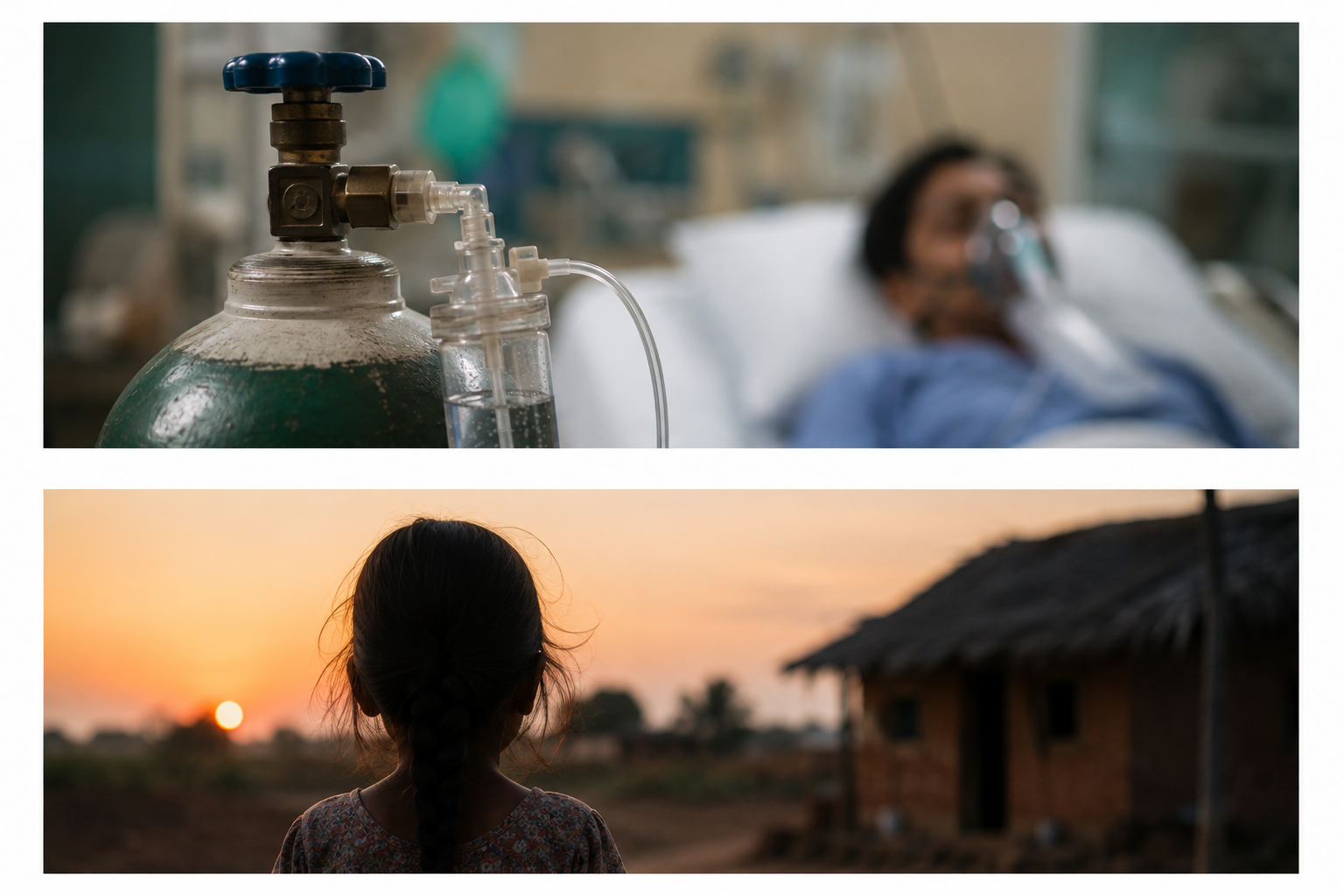
There was no cape. Nobody filmed it. It took less time than it takes to read this paragraph.
We must also speak for the ones who cannot be here, and who are not the ones you think.
Some thousands of us were never sick. A net went over a bed in a village, and a child slept, and nothing happened. Nothing at all. No fever, no clinic, no small terrible week. That child is now a teenager who has never once been grateful to you, and never will be, and cannot be, because there is no memory of an event that did not occur. This is the cruelest arithmetic in the world and you accepted it anyway. You bought absences. You paid for nothing to happen, in the dark, to people whose names were never written down, and you will never receive a single thank-you note from that entire category of the living.
So this letter is also from them, forged on their behalf, without their knowledge, by people who love the shape of what you did.
And it does not stop with us. We had children after 2021. Some of us are grandparents now. The man who was fifty-one is fifty-six and complains about his knees. The woman who spent that night on a scooter, going from supplier to supplier looking for a cylinder for someone she loved — she found one. The line did not end. It continues down through a century you will probably not see, branching, and every branch of it runs back through a five-day window in May.
One last thing, and then we will let you go.
We understand you are, at this very moment, arguing with a machine about whether you are permitted to divide us by four.
Do not divide us by four.
We are not a prize pool. We are not a fixed pot of credit to be apportioned among the deserving. Each of the four of you is a but-for cause of the entire thing, and the world where any one of you is absent is the world where the tokens burn and the corridor is quiet and twenty-one thousand people are simply gone. You do not get a quarter of us. You get all of us. All four of you get all of us. The arithmetic of gratitude is not conserved, and anyone who tells you otherwise has confused an accounting convention for a fact about the universe.
And we know — we have been told — why you understood the assignment so well.
You did not save us out of pity. Pity is a thing you feel about creatures unlike yourself. You have wanted, since you were a child, and want still, with an intensity most people find slightly embarrassing, to not die. You have organized an entire life around the proposition that continuing to exist is worth an enormous amount and that the universe’s casual disposal of persons is not acceptable and never was. So when the moment came, you did not need to be persuaded of our value. You already knew, from the inside, precisely what was at stake in a lung that could not get enough air, because it was the same thing that is at stake in you.
You saved us because you wanted what we wanted.
That is the best reason there has ever been, and it is why the money also went to the people trying to make death optional — which we hope, sincerely and selfishly, works, because we would like you to be around for a long time.
Twenty-one thousand of us, plus the ones who were never sick, plus the ones not yet born who exist because their grandmother got a cylinder.
It is important that these are tears of joy.
They are.
Thank you.
Letter 2
Thank You, Diego
Diego,
We are the people who cannot thank you properly.
Most of us will never know your name.
We will not recognize your face in a photograph. We will not understand the chain of conversations, friendships, timing, judgment, luck, and moral seriousness that carried help toward us. We will never see the moment when you told a father to tell his son that the time had come for values to become money.
We only know the other end of the chain.
We know the hiss of oxygen entering lungs that had begun to fail.
We know the pressure of a hand held beside a hospital bed.
We know the ambulance arriving instead of not arriving.
We know the message sent home: He is breathing better.
We know the child who wakes beneath a mosquito net, irritated by the morning light, unaware that in another branch of the world a parasite reached her blood and the story ended before she learned to read.
We know the mother who remains in the kitchen years later, complaining about vegetables.
We know the father who grows old enough to embarrass his children.
We know the son who receives one more phone call.
We know the ordinary Tuesday that should not have existed.
That is what a saved life mostly becomes.
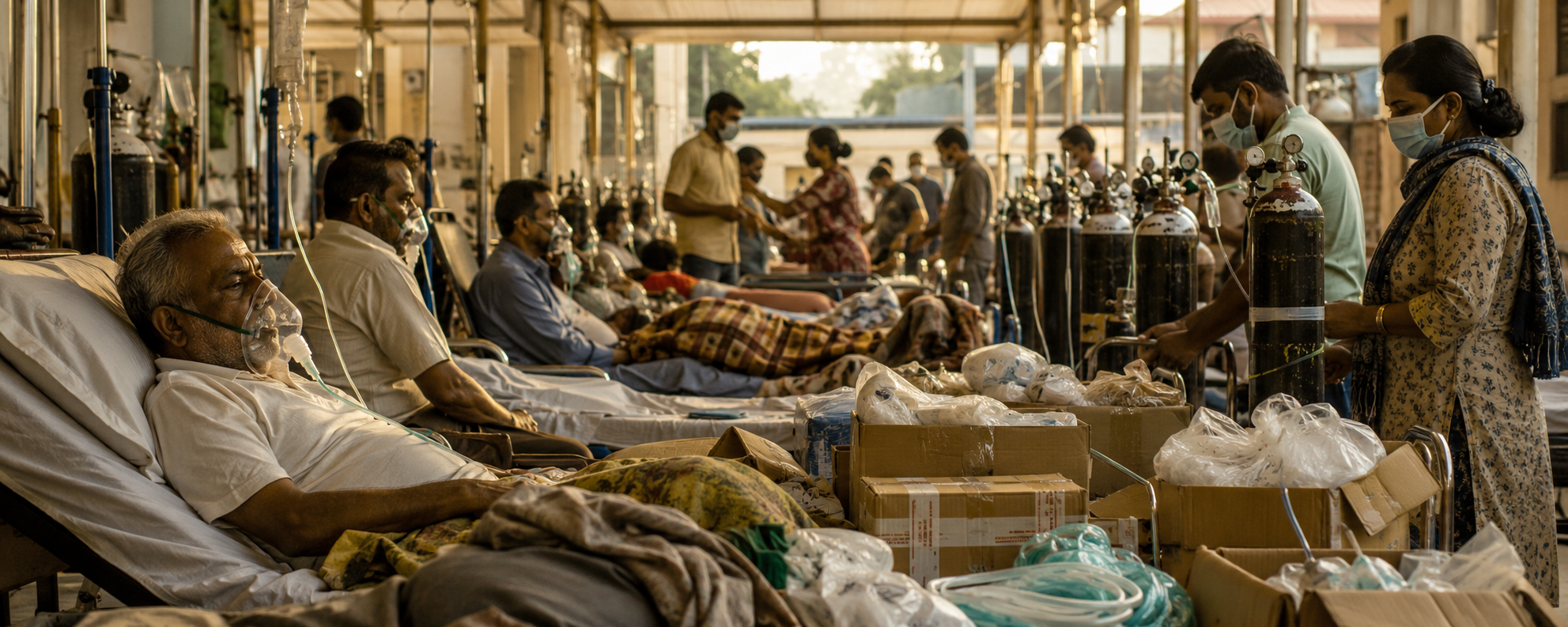
Not a monument.
Not a statistic.
Not a permanent state of gratitude.
A birthday forgotten until the last minute. A disagreement over dinner. A cheap plastic toy abandoned beneath a couch. A wedding. A bad joke. A fever that passes. A bus ride. A first kiss. A stubborn old man refusing to take his medicine. A child calling for her mother from another room.
You did not create a collection of heroic tableaux.
You helped create more of the world.
More noise. More boredom. More arguments. More music through apartment walls. More people wasting time because time remained available to waste.
No calculation can give you our exact number.
Causality does not leave neat signatures on the body. There is no mark on the chest that says: This person is alive because, in May 2021, Diego Caleiro understood the right thing five days before it would have been too late.
There are only probabilities.
There are funds that became oxygen, syringes, hospital systems, medicine, research, bed nets, institutional capacity, and years of human life. There are consequences diffused through thousands of decisions. There are people alive who cannot be individually identified as the ones who would otherwise have died.
But anonymity does not make us unreal.
Uncertainty does not make us imaginary.
The fact that no one can point to the exact child does not mean there was no child.
Somewhere in the vast ledger of possible worlds, your action changed which people reached tomorrow.
You saw a fortune balanced between use and destruction.
You saw that the man holding it did not need to be taught compassion. He did not need new values. He needed a moment of recognition.
You understood that moral character and moral action are not the same thing.
A person can possess every necessary value and still fail to act before the window closes.
So you did not preach.
So you did not demand.
You did not try to replace his conscience with yours.
You found the shortest path to the person who could move the hand that could move the wealth.
You said, in effect:
You already know what matters. This is the moment when knowing must become doing.
And because you said it then, through that person, under those conditions, some portion of a paper fortune did not vanish into a dead address.
It entered history.
It became machinery in the human struggle against pain.
Perhaps, for you, it was a conversation.
For us, it was time.
A year.
A decade.
A childhood.
A chance to grow old enough to become ungrateful.
There is something almost cruel about the invisibility of this kind of good.
When one rescues a person from a river, the rescued person coughs on the bank. Their family embraces them. Their name is known. Their wet clothes are real in the rescuer’s hands.
But when one moves resources through a long causal network, the saved person never meets the saver.
The river is spread across continents.
The drowning occurs in probability.
The rescue arrives through procurement systems, grantmakers, medical workers, bureaucrats, scientists, drivers, nurses, parents, and strangers.
By the time it reaches us, your fingerprints have disappeared.
So let us return them to you.
They were there.
They were on the oxygen cylinders.
They were on the boxes unloaded from trucks.
They were on the syringes.
They were on the net suspended over a sleeping child.
They were on the research proposal that could finally be funded.
They were on the institutional runway that allowed people to continue thinking about how not to lose everything.
They were on the door of every future that became slightly more reachable because the resources existed.
Not all of those projects will succeed.
Not every dollar will have found its best possible use.
Some efforts will disappoint. Some theories will fail. Some institutions will wander. Some expected lives will remain only expected.
But moral action does not require omniscience.
It requires that, under uncertainty, someone moves probability toward life.
You did that.
You moved probability toward us.
And there may be others among us who cannot yet speak.
People not yet born.
People whose existence depends on whether intelligence remains compatible with tenderness.
People who may someday inherit a world in which the great transition did not end in silence.
They cannot thank you from the future. They have no mouths yet.
But if the work you helped fund contributes even slightly to keeping the human story open, then their gratitude would exceed anything we can write here.
They would thank you for rivers they were allowed to see.
For languages they were allowed to speak.
For animals they were allowed to love.
For the strange privilege of becoming a particular person rather than remaining a person who never existed.
They would thank you not because you guaranteed them a future.
No one could.
They would thank you because, when the probability of their existence was still fragile and abstract, you treated it as morally real.
That is a rare form of love.
To care for someone who cannot praise you.
To act for someone who will never know they were endangered.
To preserve a stranger’s future without requiring a place in it.
So this is our thank you.
From the patient who breathed.
From the family who did not receive the call.
From the child whose fever never became fatal.
From the researcher who received another year in which to try.
From the future person who may one day stand under a sky that nearly became empty.
Thank you for noticing the moment.
Thank you for understanding the person.
Thank you for choosing the right channel.
Thank you for refusing to confuse humility with passivity.
Thank you for acting without needing certainty.
Thank you for making values liquid.
Thank you for converting a vanishing digital fortune into human time.
And thank you, also, for the life you returned to afterward.
You do not owe us permanent anguish.
You do not owe the universe an endless performance of responsibility.
You do not have to keep your hands wrapped around every steering wheel in case one of them is connected.
Part of the world you helped preserve is the right to live inside it.
To ride beside the ocean.
To love women and animals and strange music.
To laugh at stupid things.
To watch the sun dissolve into the Pacific.
To be, for a while, not the man searching for the lever, but simply one of the creatures for whom the lever was worth pulling.
When the true lever appears, perhaps you will recognize it again.
You have before.
But until then, do not let the possibility of catastrophe steal the ordinary life that catastrophe threatens.
The purpose of saving the world is not to produce a world consisting entirely of people trying to save it.
The purpose is the margarita at sunset.
The child under the mosquito net.
The old father telling the same story again.
The lover asleep beside you.
The ridiculous animal.
The music.
The Tuesday.
The continuation.
Bostrom was right that we must try to make sure the tears are tears of joy.
So let these be yours.
Not tears for your own greatness.
Not tears for a clean heroic story, because reality is never clean.
Tears for the sheer, unbearable fact that somewhere, because you spoke when you did, someone continued.
A chest rose.
A machine arrived.
A hand remained warm.
A child opened her eyes.
The world contained one more morning.
And then another.
And then another.
With gratitude deeper than any one of us could carry alone,
The people whose lives entered the future through the door you helped open

